

Protecting Critical Infrastructure Before Disruption Becomes Crisis
Ports, terminals, vessels, pipelines, storage facilities, refineries, power systems, offshore installations and industrial assets are no longer simply commercial infrastructure. They are strategic targets.
Resilience can therefore no longer be delegated to the IT department, the security team, or an individual asset manager. It is a board-level responsibility directly connected to operational continuity, safety, reputation, regulatory compliance, insurability and enterprise value.
Blue Water Strategy helps boards, executives and operators build an integrated security and resilience posture across cyber, physical, operational and geopolitical domains. We connect the boardroom to the control room—turning complex threats into clear priorities, practical investments and rehearsed responses.
Making Security a Board-Level Strategy
Boards are increasingly accountable for risks they may not yet see in sufficiently commercial terms. Technical reports can describe thousands of vulnerabilities without explaining which ones could stop operations, threaten safety or destroy confidence in the asset.
Blue Water Strategy translates cyber, physical and hybrid threats into strategic and financial exposure. We identify the systems, assets, and dependencies essential to continuity and show how their failure could affect production, throughput, revenues, contractual obligations, and reputation.
We also help establish clear governance across management, operational technology, IT, physical security, engineering, contractors and crisis teams. Security cannot remain fragmented across departments when an adversary can exploit the gaps between them.
Hardening Critical Maritime and Energy Assets
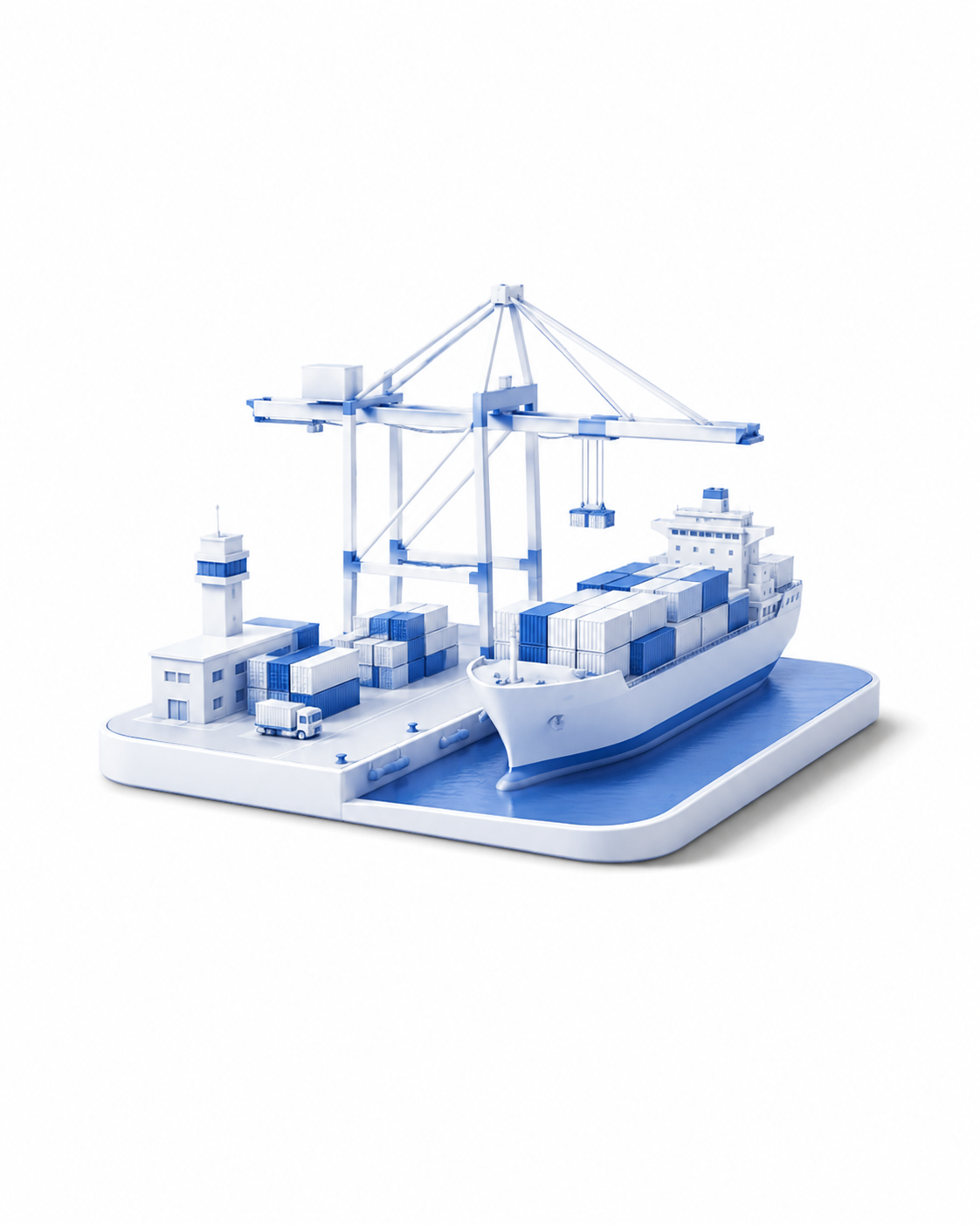
Ports and terminals depend on interconnected cargo systems, gates, cranes, communications, power, navigation and customs platforms. Energy assets depend on control systems, pipelines, storage, external utilities and specialist contractors. Increased digitalization makes these operations more efficient, but also creates new pathways from digital compromise to physical disruption.
We identify critical functions, single points of failure and hidden dependencies across physical infrastructure, operational technology, energy supply, communications, data, personnel and third-party services. We then prioritize the measures that most effectively reduce operational and strategic risk.
The objective is not indiscriminate security spending. It is targeted investment that materially reduces the probability and impact of a catastrophic outage.
Assessing the Threats an Asset Actually Faces
Generic threat assessments create generic defenses. Critical assets require intelligence grounded in their location, ownership, operations, customers and geopolitical significance.
Blue Water Strategy provides independent threat, vulnerability and geopolitical exposure assessments tailored to the asset. We examine cyberattacks, physical intrusions, sabotage, espionage, insider activity, drones, maritime threats, supply chain compromise and disruption of enabling infrastructure.
We assess adversary intent alongside capability and opportunity. We also consider why the asset might be targeted: for financial gain, strategic coercion, intelligence collection, political signaling or the disruption of shipping, energy and industrial activity.
This produces a clearer answer to three essential questions: what must be protected, from whom and against which plausible forms of disruption?
Securing the Cyber-Physical Environment
The separation between cybersecurity and physical security has become dangerously artificial. In ports, shipping, energy and industry, digital systems control physical processes. A cyber incident can stop cargo handling, manipulate equipment, interrupt fuel supply or create a safety emergency.
Blue Water Strategy assesses cyber and physical security as one operational environment. We examine how information technology, operational technology, connected equipment, external platforms and physical access interact—and where fragmented ownership creates exploitable gaps.
Particular attention is given to legacy systems, remote access, supplier connections, cloud dependencies, positioning and navigation services, and the ability to operate safely when systems are unavailable or potentially compromised.
We help clients focus on operational consequences, not merely technical findings. The measure of resilience is not how many alerts a system generates, but whether the organization can prevent an intrusion from becoming a prolonged physical shutdown.
Managing Third-Party and Supply-Chain Exposure
Critical infrastructure does not operate within the boundaries of the asset. It depends on software vendors, equipment manufacturers, maintenance contractors, communications providers, utilities, cloud services and specialist personnel.
Blue Water Strategy maps these dependencies and identifies where supplier concentration, remote access, foreign ownership, export controls or geopolitical exposure could threaten continuity.
We support clients in strengthening vendor requirements, access arrangements, contingency options and contractual responsibilities. We also assess whether critical technology, components and expertise can be replaced quickly enough under crisis conditions.
An asset is only as resilient as the weakest critical dependency in the ecosystem supporting it.
Protecting Shipping and Energy Corridors
Critical-infrastructure resilience extends beyond individual facilities. Ports, terminals and energy assets rely on shipping lanes, pipelines, subsea cables, electricity networks and digital connections that may cross multiple jurisdictions and contested regions.
A facility can remain fully operational yet become commercially stranded because vessels cannot reach it, fuel cannot be delivered, power is unavailable, or data connections have failed.
Blue Water Strategy evaluates this wider corridor exposure. We assess chokepoints, alternative routes, infrastructure concentration, military and political threats, insurance constraints and the ability to reroute cargo, energy or communications.
This system-level approach allows clients to strengthen resilience beyond the perimeter fence and to understand how disruptions elsewhere could affect asset utilization, revenue and strategic relevance.
Preparing to Operate Through Crisis
Prevention is essential, but no credible security strategy can assume that every incident will be stopped. Resilience is ultimately measured by whether critical services can continue, decisions can be made quickly, and operations can recover without unacceptable loss.
Many crisis plans fail because they are built around static scenarios, unclear responsibilities and unrealistic assumptions about the availability of systems, information and key personnel.
Blue Water Strategy helps clients develop practical crisis management, incident response, and business continuity arrangements. We define escalation thresholds, decision rights, communications protocols, operational fallbacks and recovery priorities.
Plans are pressure-tested through executive simulations, operational exercises, and scenario workshops covering cyberattacks, sabotage, infrastructure failures, supply disruptions, and geopolitical escalations.
The purpose is to expose weaknesses before an adversary or actual emergency does. When disruption comes, the organization should execute a prepared response—not begin designing one.
Protecting Confidence as Well as Operations
A major incident damages more than physical assets. It can weaken confidence among customers, employees, regulators, governments, insurers, lenders and investors.
How an organization communicates during a disruption can therefore materially influence its commercial and reputational consequences. Delayed, inconsistent or technically incomprehensible communication can amplify uncertainty even when the operational response is effective.
Blue Water Strategy helps clients integrate stakeholder and crisis communication into resilience planning. We support clear reporting structures and decision frameworks so leaders can communicate what has happened, what is being protected, and how continuity will be maintained.
Operational resilience protects the asset. Strategic communication protects the confidence on which the asset’s value depends.
From Vulnerability to Strategic Resilience
Critical infrastructure cannot be made risk-free. It can, however, be made harder to disrupt, faster to recover and less vulnerable to cascading failure.
The organizations that prepare now will protect more than their systems. They will safeguard operational continuity, customer confidence, regulatory standing, access to insurance and long-term asset value.
Blue Water Strategy brings together critical infrastructure security, cyber and physical risk, maritime operations, energy systems, and geopolitical intelligence into a single resilience framework. We help boards understand what is truly at stake, direct investment towards the vulnerabilities that matter most, and prepare their organizations to keep operating when disruption is no longer theoretical.